
HRMS Implementation in India: A Complete Step-by-Step Guide for Businesses
3 November 2026 · 9 min read
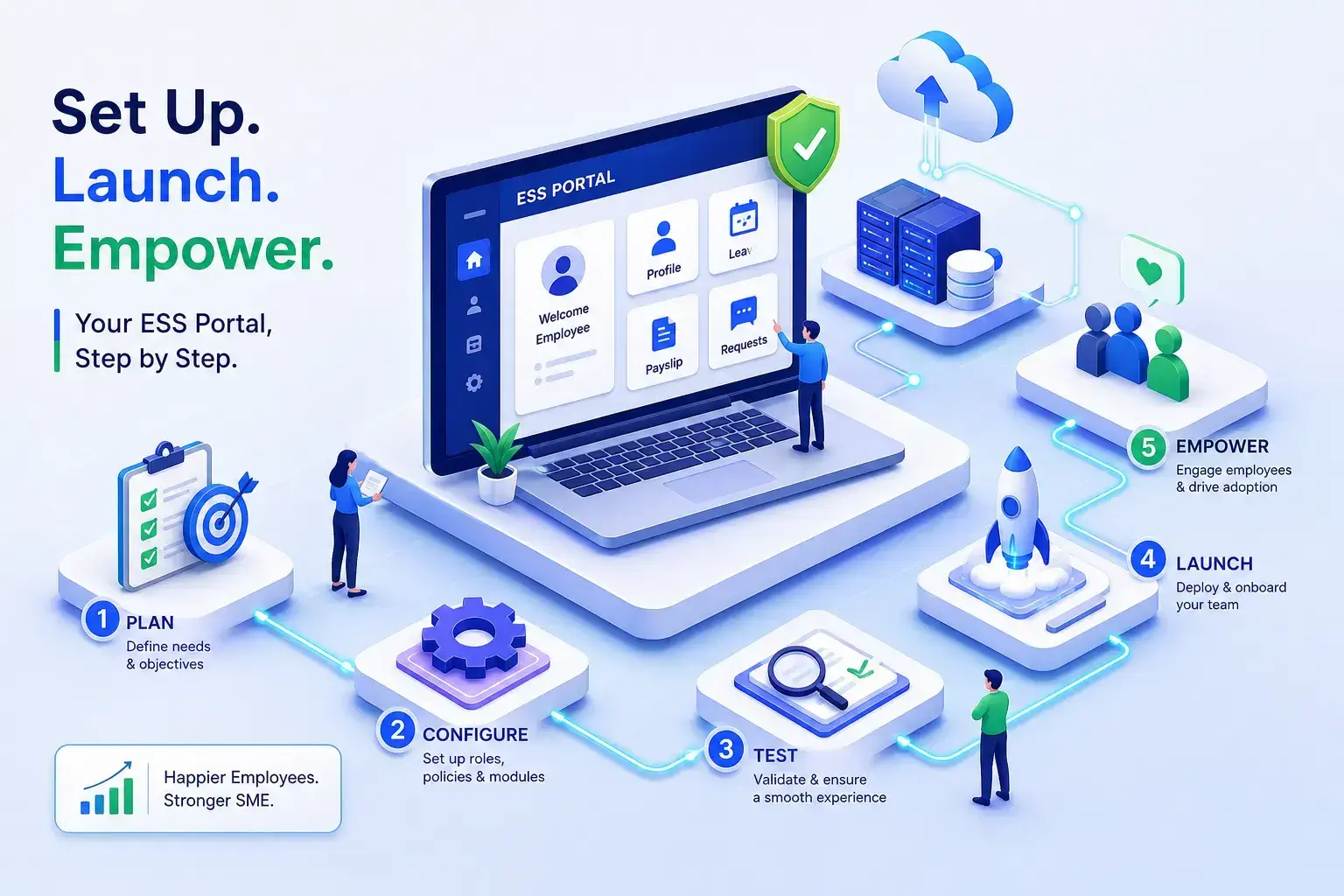
Most HRMS projects do not fail because of the software. They stall because of the way it was introduced: messy employee data, unclear leave rules, nobody trained and everything switched on at once. HRMS implementation is the structured process of taking an HR management system from purchase to daily use, and a clear plan is what separates a smooth start from months of workarounds. This guide walks Indian businesses through the process step by step, with a checklist, common challenges and the factors behind cost.
What is HRMS implementation?
HRMS implementation covers everything needed to make an HR system work in your business: defining what you need, preparing employee data, configuring modules, training users and going live. It is different from choosing a tool. If you are still comparing options, start with what HRMS software is or the small business HRMS checklist, and come back here once you are ready to roll out. You will also see the same work called HR software implementation.
Why do businesses need a structured HRMS implementation process?
- Data starts clean. Wrong leave balances or salary details on day one erode trust in the system.
- Rules match reality. Leave, shift and payroll policies are configured the way your company actually works.
- Adoption is planned. Employees and managers know what changes and how to use it.
- Risk is contained. A pilot and a parallel payroll cycle catch errors before they reach everyone.
- Time is saved later. Effort spent up front avoids constant corrections after launch.
Key stages of the HRMS implementation process
These HRMS implementation steps apply whether you are a 30-person company or a multi-location business. Only the scale changes.
Step 1: Identify your business and HR requirements
List what is broken today: attendance kept on paper, leave approved over chat, payroll recalculated by hand. Note headcount, locations, workforce types (office, field, shop floor) and statutory needs such as PF, ESI, professional tax and TDS. This becomes your requirements document and your success measure.
Step 2: Choose the right HRMS solution
Shortlist two or three vendors against your requirements and test them with real scenarios. Cost drivers are covered in what drives HRMS pricing.
Step 3: Prepare and organise employee data
This is the step most projects underestimate. Gather every employee's details in one sheet, remove duplicates, fill gaps and confirm departments, designations, reporting lines, leave balances, salary structures and statutory numbers. Documents such as offer letters and ID proofs should be ready to attach to each record. Example: a 60-person manufacturer finds three employees listed under two departments and two missing bank details, and fixes them before import, not after the first payroll.
Step 4: Configure HRMS modules
Switch on modules in a sensible order. Many businesses begin with employee management, then attendance and leave, and add payroll once the foundation is stable. Set up roles and permissions so managers and HR see only what they should.
Step 5: Set up attendance and payroll
Choose the attendance method for each worker type: web punch-in for office staff, GPS check-in for field staff, biometric for plant gates. Then configure salary components and statutory rules. See attendance management and payroll software for how these fit together, and the payroll processing guide for the statutory background.
Step 6: Configure leave policies and employee workflows
Enter your leave types, accrual and carry-forward rules, holiday calendars and approval chains. Confirm who approves what, and what happens when an approver is away. The leave management module and the leave policy guide help you define these clearly before you configure them.
Step 7: Conduct employee training
Train HR first, then managers, then employees. Show employees the simplest actions: checking leave balance, marking attendance and downloading a payslip through employee self-service. Short, role-based sessions work better than one long presentation.
Step 8: Test and launch the HRMS
Pilot with one department or shift, fix what you find, then roll out in phases. Before you retire the old process, run one full payroll cycle in parallel and compare outputs. Plan a review at 30 and 90 days.
HRMS implementation checklist for businesses
| Stage | Check before moving on |
|---|---|
| Planning | Requirements written, owner named, success measures agreed |
| Data | Duplicates removed, fields complete, balances and salaries verified |
| Configuration | Modules, roles, approvals and policies set up |
| Attendance and payroll | Attendance methods chosen, salary and statutory rules configured |
| Training | HR, managers and employees trained for their own tasks |
| Testing | Pilot completed, parallel payroll cycle matched |
| Launch | Old process retired, support channel named, 30/90-day review booked |
Common HRMS implementation challenges and how to overcome them
- Poor data quality. Clean and verify records before import, not after.
- Unclear policies. Write down leave, shift and payroll rules first; software cannot decide them for you.
- Low adoption. Train by role, start with simple self-service tasks and name a go-to person for questions.
- Doing everything at once. Phase modules and pilot with one team.
- Skipping parallel payroll. Run one cycle in both systems before switching.
- No owner. Assign one person accountable for the project and decisions.
How much does HRMS implementation cost in India?
There is no single figure, and quoting one would mislead. HRMS implementation cost depends on:
- Headcount and number of locations
- Modules you switch on, such as payroll, attendance, performance or recruitment
- Data migration effort and how clean your records are
- Customisation of leave, shift or approval rules
- Training and support level, and whether set-up is included or charged separately
- Internal time from HR and managers, which is easy to overlook
Ask every vendor for a written breakdown of subscription, set-up, training and support. See Manitham HRMS pricing for how plans are structured, or book a demo for a quote based on your team.
How to choose the right HRMS for your business
- Match your workforce. Check attendance methods for office, field and shop-floor staff.
- Verify statutory payroll. Ask how PF, ESI, professional tax and TDS are handled and updated.
- Check connectedness. Attendance, leave and payroll should share one employee record.
- Look at set-up effort. How much can you configure yourself, and what support is available?
- Test with your data. Load real employees and run a sample scenario.
Indian employment law differs by state and sector, so confirm current requirements with the Ministry of Labour and Employment and with EPFO and ESIC directly. This guide is general information, not legal advice.
How Manitham HRMS simplifies HR management
Manitham HRMS is built so the modules you implement share one employee record. Based on what the product pages describe:
- Employee management: profiles, documents, departments and reporting lines in one record.
- Onboarding: hired candidates move into the employee record, with details entered once ready for attendance, leave and payroll.
- Attendance and GPS check-in: biometric, GPS-based mobile and web punch-in.
- Shift management: shifts assigned and rotated, with late marks and overtime calculated against them.
- Leave management: configurable leave policies, online requests and approvals.
- Payroll: PF, ESI, professional tax and TDS, payslips and Form 16.
- Recruitment: job postings, candidate tracking and interview scheduling.
- Performance: goals, appraisals and review history.
- Reports: reporting within each module, such as attendance, leave, recruitment and payroll reports.
Explore the full HRMS platform, or the recruitment and performance modules if you plan to add them later. Implementation scope depends on your modules and headcount, so ask about it in a demo.
Conclusion
Successful HRMS implementation comes down to four things: a clear plan, clean employee data, trained users and the right platform. Start with requirements, migrate carefully, pilot before launch and run payroll in parallel. If you are ready to see how this works in practice, explore Manitham HRMS and request a product demo.